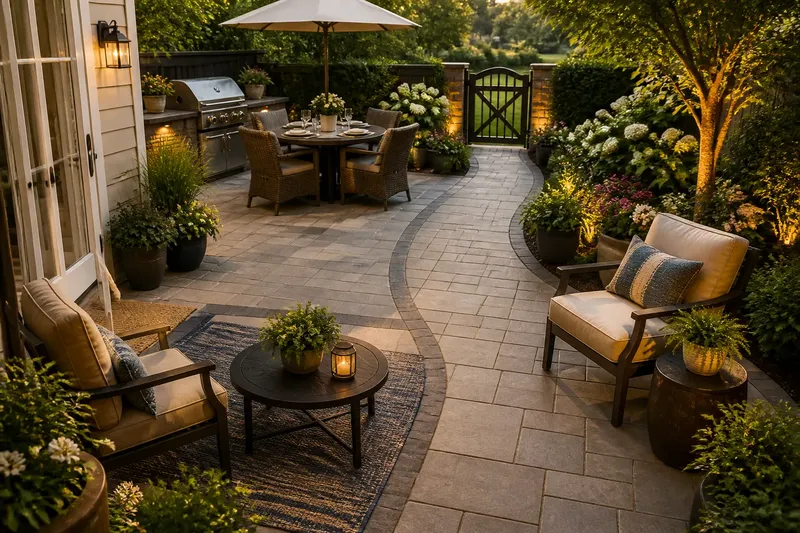
How the Patio Became a Room for Gathering
Patio history helps you read a paved courtyard’s changing role and decide which old features can support the way you use the space today.
The common mistake in patio history is treating every paved courtyard as an unfinished lounge. That can lead to a tidy seating area that ignores how the space connects to household work. Patio history is more useful when it begins with a modest question: what jobs did a particular outdoor surface serve, and what evidence can still be seen?
There is no single timeline for patios. The word and the forms it describes have been used differently across regions and building traditions, so a broad story of one universal shift would be misleading. Instead, look at a courtyard or paved yard in its own setting: its doors, drains, walls, paving, and signs of use can suggest how people moved through it.
Read the patio as evidence of local use
A hard surface near a house could support practical tasks because it was firm and easier to sweep than soil. Depending on the home and its setting, that might mean carrying items between indoors and outdoors, tending pots, or handling everyday household work. The paving alone cannot tell you which activity came first, but its relationship to entrances and other features can offer clues.
For a historically grounded account, avoid claiming that patios everywhere began as work yards or later became leisure rooms. Use a specific building, region, or documented source when making claims about origins. Without that context, describe visible features and plausible functions as possibilities rather than established history.
Look for clues that can be checked directly:
- If a doorway opens onto a broad, unobstructed paved area, consider whether it supports easy movement; if it does not, examine later additions or changes before assigning a purpose.
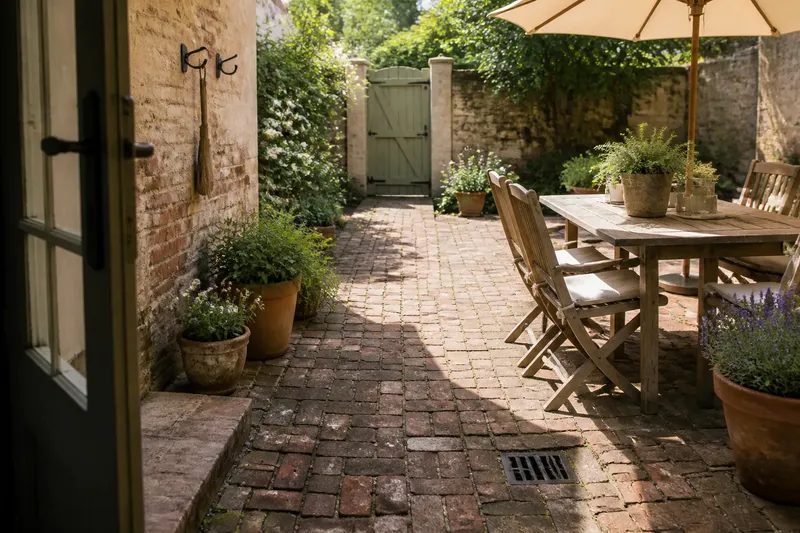
- If a drain sits in a low part of the paving, check where water runs; if the route is unclear, avoid assuming the space was designed for washing or food preparation.
- If a worn strip links a door with a garden gate, compare it with the current route; if they differ, treat the wear as a clue to past movement, not proof of a specific task.
- If an old wall or overhang shades part of the courtyard, note its position through the day; if the shade is limited, do not infer that the whole space was intended for sitting.
- If paving changes material near a threshold, inspect where each surface begins and ends; if the boundary aligns with a change in access, record that possibility rather than calling it a confirmed work zone.
- If pots, hooks, or storage remain, check whether they appear built in or readily movable; if they are movable, treat them as evidence of present use rather than the patio’s original purpose.
Household habits can add leisure without erasing work
A paved courtyard can accommodate both practical routines and time spent sitting. A chair or table changes how people use the space, but it does not by itself establish when or why that change happened. For a particular home, family records, architectural documentation, or local histories may clarify the sequence; without them, keep the account specific to what can be observed.
Furniture can also make a mixed-use space easier to read. A movable chair suggests a pause is possible, while a permanent bench signals a more settled arrangement. Neither tells the full story: placement, access, shade, and the household’s habits all matter.
Why can an older patio resist a new use?
Why does a patio feel exposed?
An open courtyard may have been shaped around access rather than shade or privacy, though its original purpose cannot be inferred from openness alone. Check which walls, eaves, or trees provide shelter at the times you expect to use the space; if none do, a movable umbrella may offer shade without altering the building.
Why does a table seem awkward?
A table may sit where people need to reach a door, drain, or storage area. Check those features before choosing a position; if the table blocks a working area, try a folding table that can be put away after meals.
What can paving reveal about an old patio?
Changes in surface, wear, and drainage can suggest how people moved across a courtyard, but none proves a particular activity on its own. Compare those clues with the building’s layout and reliable local records before making a historical claim.
How can a working courtyard also feel inviting?
Keep the features that support regular tasks and make any seating additions easy to move or maintain. If a fixed furnishing would interfere with access or upkeep, choose a portable alternative instead.
Use the site’s clues without turning them into a story they cannot support
When adapting an existing patio, separate what you can observe from what you are guessing. A worn route is visible; the reason for it may not be. A drain’s location is visible; its original use may require records or expert interpretation. This distinction lets you make practical choices without presenting a plausible explanation as settled history.
Say you have inherited a paved courtyard with a drain beside the garden gate, a strip of worn brick leading from the kitchen, and two old hooks on a wall. You record the drain, paving, and hooks, then compare the worn strip with the route people take now. If the current route matches, you can reasonably treat that strip as a useful circulation clue, while leaving its earlier purpose open; if the routes differ, you avoid assigning the wear to a current habit. You keep the hooks available for present-day use but do not claim they were installed for a particular historical task without supporting records.
This approach also helps avoid forcing a new arrangement onto the whole surface. Notice which features are fixed, which are easy to move, and which interpretations remain uncertain. A change in paving may mark a repair rather than a change in use; a sheltered corner may be convenient without having been designed as a sitting area.
Materials shape what the patio can support
Brick, stone, concrete, and tile each give a courtyard a distinct surface, but the material does not identify its history by itself. Look at how the paving meets thresholds, drains, walls, and garden soil. For claims about age or construction, consult reliable local documentation or a qualified preservation professional when the building’s history matters.
When planning present-day use, consider maintenance and the surface’s condition rather than covering clues automatically. If a rug or container would obscure a drain or make a route harder to use, choose a different location. For outdoor products and surface treatments, follow the manufacturer’s care and placement instructions.
Patio history is most useful when it stays specific
A patio’s past may be documented, partly visible, or uncertain. You can still make it more useful by noting what is there, checking how people move through it, and distinguishing evidence from interpretation. That keeps a practical surface available while making room for sitting, meals, or conversation.
When you search patio history, look for accounts tied to a named place, building tradition, or documented property rather than a single timeline meant to fit every home. A specific source can explain what general visual clues cannot, and it can help you decide which parts of the courtyard’s past deserve to shape its next use.