A Late-Summer Supper, Set Up Around the Table
Plan a late-summer outdoor supper around the table with a serving layout, comfortable seating, weather-ready details and room for relaxed conversation.
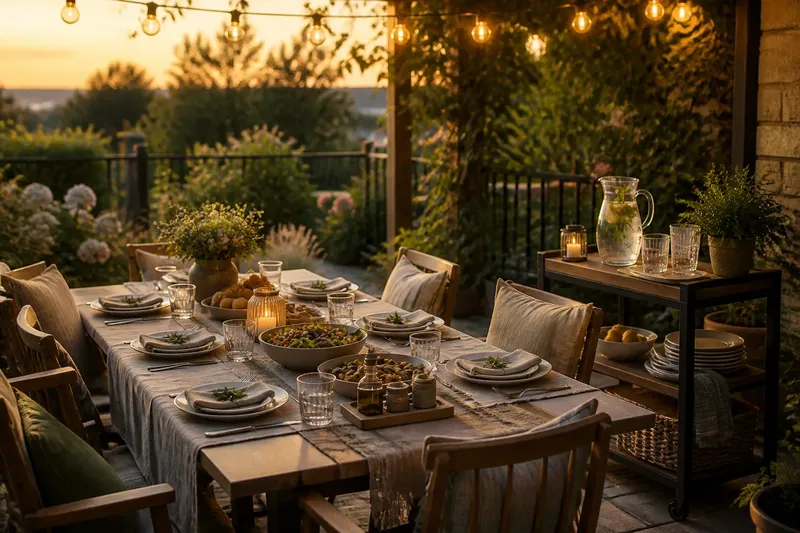
The common mistake with a late-summer outdoor supper is setting the table before deciding where food, drinks, and used dishes will go. The result is a crowded tabletop and a host weaving through the meal to fetch forgotten items. Plan the serving sequence first, then give the table a clear job: holding the meal and bringing people together.
Plan a late-summer outdoor supper around the meal
Choose how dinner will be served before arranging anything. Guests might pass shared dishes, serve themselves from a side surface, or receive plated food. Each approach needs a different amount of room on the table and a different place for serving bowls to land.
Gather the plates, glasses, cutlery, napkins, pitcher, serving dishes, and centerpiece you expect to use. Arrange them on the table while it is empty. If a bowl leaves no space for a glass, move the bowl to a side table or bring it out only when dinner starts. Keep decorations that do not serve the meal off the dining surface.
Give the setup three distinct purposes:
- Dining surface: plates, glasses, napkins, and the dishes guests need at the table.
- Serving surface: a stable side table, outdoor cart, or nearby counter for drinks, extra food, and used dishes.
- Kitchen connection: a direct route for carrying food between the kitchen or grill and the serving surface.
On a small patio, these areas may be close together, but each still needs a defined role. A weather-appropriate cart or spare garden table can keep backup items from taking over the dining surface.
Put drinks and serving dishes where guests can reach them
Place the serving surface near an open end of the table, where guests can approach it without crossing through the middle of the meal. Keep the route from the kitchen or grill clear of the serving area, and put water and napkins somewhere guests can find without asking.
Match the station to the menu. For a shared meal, leave space for bowls to wait before they go onto the table. For plated food, use the surface for the next course or for empty serving dishes. If hot food is involved, choose a steady surface away from the main path of hands and plates, and follow the cookware’s handling instructions.
Say you have a rectangular patio table, a narrow outdoor cart, a pitcher, and a large salad bowl. Put the pitcher and glasses on the cart, then bring the salad bowl to the table when guests are ready to eat. The expected result is a less crowded tabletop and a visible place to refill drinks without reaching across plates.
Arrange the table to support conversation
Set chairs so diners can see one another without needing to twist around a centerpiece. At a rectangular table, seats along the long sides make it easy to talk across the table; end seats can include guests who might otherwise feel apart. For a round or square table, space chairs around the perimeter while accounting for armrests and broad serving dishes.
Let the conversation, not the view alone, guide the direction of the table. If the yard or garden is worth looking at, preserve a sightline from some seats while keeping the main gathering oriented toward one another. A low centerpiece, such as a shallow bowl of fruit, adds color without creating a barrier between diners.
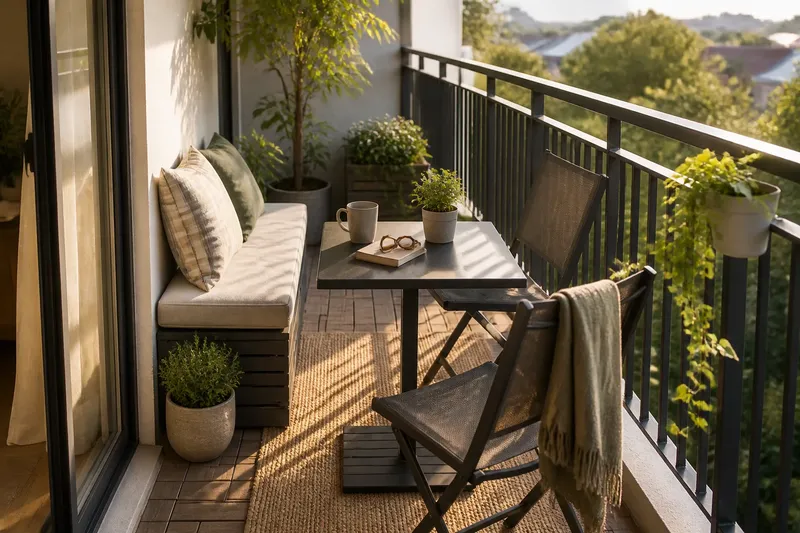
On a compact balcony, use a tray for condiments so it can be lifted away when the meal needs more room. Keep access to doors and required exits unobstructed, and position tableware where it cannot be knocked toward the edge.
Choose practical tableware and evening light
Keep only useful items on the table: plates, cutlery, glasses, napkins, and the dishes guests need to share. A small tray corrals condiments and can be moved as serving needs change. Cloth napkins are less likely than very light paper to blow away in a breeze.
Choose stable drinkware and serving pieces suited to the surface and setting. Leave clear space where guests can set down a glass while serving themselves. If the table is near paving or a hard edge, avoid placing items where a bump could send them falling.
Light the table so guests can see food and faces without staring into a bright source. Use outdoor-rated fixtures or lanterns according to their labels and manufacturer instructions. Keep cords, flames, and hot fixtures away from serving areas and materials that could catch or tip.
Prepare for shifting evening conditions
Check the actual conditions near the table before guests arrive. Notice whether late sunlight reaches the seats, whether the breeze carries napkins, and whether nearby lighting attracts insects. Move the table into comfortable shade if you can do so without blocking access around it.
Keep a light layer or throw in a basket nearby if the evening may cool. If insects are a concern, consider screens or suitable outdoor products and follow their directions; keep food covered until serving. A fan can help move still air, but aim it away from lightweight table items.
Choose a backup location before food is outside. If weather or other conditions make the patio uncomfortable, moving dinner to an indoor table or covered spot is simpler when the alternative is already clear.
What should you check before guests arrive?
Use these checks to make a decision about each part of the setup rather than adding last-minute clutter:
- Table space: Check whether plates, glasses, and the serving dishes fit together. If they do, keep the planned service; if not, move a dish to the side surface or serve it later.
- Drink access: Check whether guests can reach water without crossing the food handoff. If they can, leave the pitcher in place; if not, move it to the open end of the table or cart.
- Serving route: Check whether the route from the kitchen or grill is clear. If it is, use that route; if not, move a cart or spare item before carrying food outside.
- Chair placement: Check whether each chair can be pulled out without striking a planter, railing, or wall. If it can, leave the arrangement; if not, angle or reposition the chair, or use another seat.
- Lighting: Check whether faces and plates are visible from the seats. If they are, keep the light as arranged; if not, redirect an outdoor-rated fixture or move the table within its safe reach.
- Weather comfort: Check for direct sun, a chilly breeze, or uncomfortable conditions. If the patio remains comfortable, continue outside; if not, use the prepared covered or indoor spot.
- Balcony access: Check that doors and required exits remain open and that items are stable. If both conditions are met, keep the layout; if either fails, remove or relocate the obstructing item.
How can a small patio still work for dinner?
What should stay on a small outdoor table?
Keep the table to the dishes and place settings guests use during the current course. Move backup food, extra glasses, and napkins to a nearby shelf or cart so the center stays available for eating.
How can you serve dinner without a side table?
Bring food out in courses, or set drinks on a nearby stable counter that does not block the route around the table. Clear each serving dish when guests finish with it so the next item has a place.
Where should a table go on a balcony?
Place it where diners can use the door and any required exit without shifting furniture. Keep dishes and drinkware steady, away from the edge, and remove decor that takes up useful space.
What is a useful last check before dinner?
Look at the table from a seated position and check whether guests can see one another and reach the first items they need. If something is in the way, move that item rather than adding more furniture to solve the problem.
Work through the setup before dinner
Imagine you have a small patio table, four chairs, a side cart, a pitcher, glasses, a salad bowl, and a main dish arriving from the kitchen. These are invented planning details, not a report of a real gathering. First, place the plates, glasses, cutlery, and napkins on the table; the salad bowl leaves little room, so reserve it for the serving moment. Next, put the pitcher and glasses on the cart at the table’s open end. Then check that the route from the kitchen to the cart is clear; if a planter blocks it, move the planter rather than carrying a hot dish around it. Finally, check that the chairs and balcony door remain usable. The resulting arrangement keeps water easy to reach and the meal surface available, while the tradeoff is that the salad bowl comes out only when dinner begins.
A late-summer outdoor supper is easier to host when the table has room for the meal and every extra item has a home elsewhere. Before guests arrive, make one practical decision about the serving route and one about the weather backup. Keeping water within reach is a useful final touch: it lets guests refill without interrupting the conversation or sending the host back inside.