Bench or Loose Chairs on a Narrow Balcony?
Choose a bench or loose chairs for a narrow balcony by comparing footprint, flexibility, storage, and the everyday uses each arrangement can support.
The most common mistake on a narrow balcony is choosing seats by appearance before checking how they behave in the space. A bench can claim the whole wall, while loose chairs can drift into the doorway; either choice may leave you with seating that is awkward for the way you actually use the balcony. To decide between a bench and loose chairs, start with one ordinary day and track what needs to happen there.
Start with the balcony’s real jobs
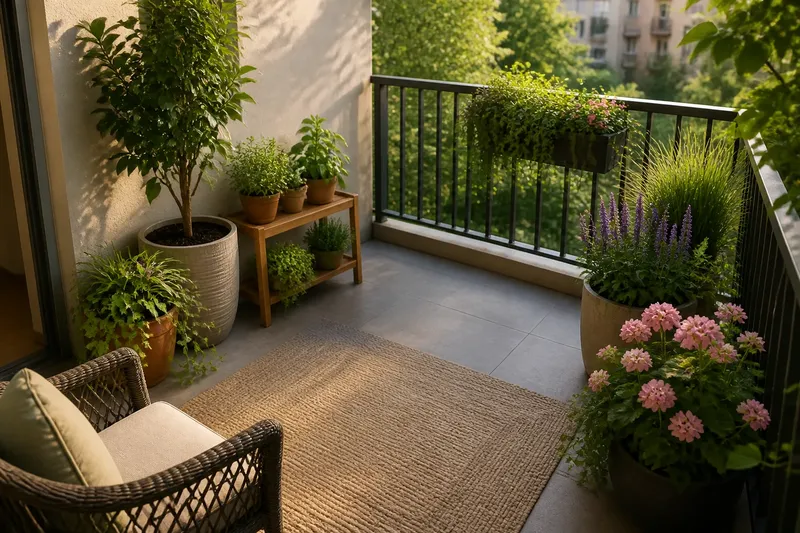
Say you have a long, narrow balcony with a sliding door, a railing-side view, and just enough room for a compact table. This is an invented situation, not a report of a real household. You want a place to drink coffee alone, sit with a friend, and occasionally set down a book or bag without turning the balcony into a storage area.
Before comparing furniture, write down the uses that matter most. Separate frequent needs from occasional ones. A seat that works for a quick break may not suit two people sharing a meal, and a flexible arrangement may be more valuable than a fixed row of seats if the balcony changes jobs through the week.
- Count the people who usually sit outside together.
- Note whether you need a table, and whether it stays out or gets moved.
- Decide if you want a seat that can also hold a cushion, tray, or folded throw.
- Notice where the door swings or slides and where you naturally step onto the balcony.
- Consider whether chairs need to be brought inside or covered in bad weather.
These notes give the comparison a practical basis. The question is not simply which furniture takes less space; it is which arrangement gives the space more useful states without creating daily hassle.
Compare the bench’s fixed footprint with chair flexibility
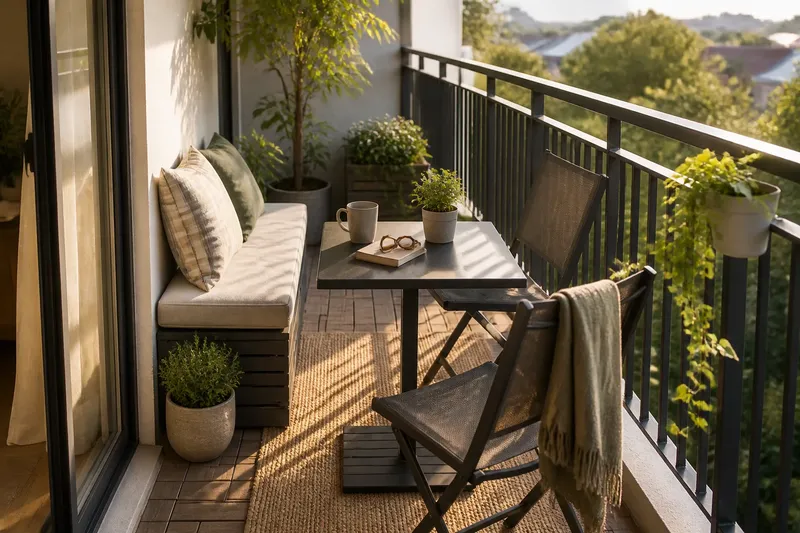
A bench creates a dependable seating edge. Its position does not change, so you can place a small table in relation to it and keep the seating area visually orderly. A bench with a back may feel more settled for lingering, while a simple backless bench can serve as a seat or a surface for a bag when no one is using it. Its drawback is equally direct: it occupies the same strip of floor even when you would rather have open room.
Loose chairs work differently. One chair can face outward for a quiet drink; a second can be brought alongside for company. If they are light and stackable, they may be moved indoors or grouped out of the way. That flexibility is useful only if moving them feels easy. Bulky chairs, awkward legs, or cushions that need constant rearranging can turn “adaptable” into another chore.
Think about the footprint in use, not just the furniture’s outline. A bench may be narrow but still make it difficult to approach the table. Chairs need room to pull out and turn, but they can be angled or removed when the occasion changes. Use painter’s tape to mark each proposed seat on the balcony floor, then place a cardboard box where the table would go. Walk through the doorway, sit down, and mimic the movements you expect to make.
See which arrangement handles more kinds of use
Return to the invented balcony. If the owner mostly sits alone, one loose chair near the railing may leave room for a plant stand or a table that can be tucked away. When a friend visits, a second chair can be added. This arrangement changes from solo retreat to conversation without keeping two seats in the way every day.
Now imagine the same person often shares breakfast outside and wants a stable place to put a cushion or a folded blanket. A bench along the wall could support more than one seating position and keep a compact table within reach. It may also make the balcony feel arranged even when no one is sitting there. The expected observable result is a consistently ready seating area, at the cost of having less freedom to clear the floor.
There is a middle option: a short bench paired with one movable chair. This can work when you want a permanent spot for one person but need occasional seating for a guest. It does not suit every balcony; the test is whether the chair can be moved without blocking the route to the door or making the table difficult to reach.
Choose materials and storage that fit the routine
Furniture that stays outside needs to fit the balcony’s exposure and your willingness to maintain it. Powder-coated metal is often easy to wipe, while outdoor-rated wood may need more attention to its finish. Resin or other outdoor-rated synthetic materials can be lighter to move, though their shape and comfort vary. Check the product label and manufacturer’s care instructions for weather suitability and upkeep.
Also account for cushions. A bench cushion can make a fixed seat more comfortable but may be cumbersome to bring in. Separate chairs allow individual cushions, which can be easier to store one at a time; they can also scatter or slide if left loose. A lidded storage box may help, but only if it fits without taking away the very floor space you are trying to preserve.
For a narrow balcony, try the furniture with the cushions and table in place rather than evaluating the bare frame alone. Check that the chair still moves, the bench remains comfortable to enter and leave, and the door operates as intended. Product instructions and building rules may affect what can safely be placed or secured outdoors.
Which seating choice suits your balcony?
Is a bench better for a very narrow balcony?
It can be, if its fixed position leaves a usable way to reach the seat and the table. A bench does not need to be pulled out for someone to sit, but its permanent footprint can limit other uses.
Are separate chairs easier to rearrange?
Usually, if they are light enough to move and there is somewhere sensible to place them. Check the effort of moving them in your actual layout, including any cushions or nearby table.
Can a bench seat more people than chairs?
A bench can offer a shared seating surface, but usable capacity depends on its design and the room around it. Do not choose one only to fit more people if the balcony’s main routine is solitary or the bench makes access awkward.
What if I want both a place to sit and a clear floor?
Consider one fixed seat with one movable chair, or a chair that can be stacked or stored when not needed. Mark the arrangement first so you can see whether the cleared floor is genuinely useful.
Make the decision with a short trial layout
In the invented situation, the owner tapes out the bench along the wall and tries the doorway, table, and sitting positions. The bench works for coffee and sharing breakfast, but it leaves the floor feeling committed to seating. Next, the owner marks two loose chairs and finds that one chair serves the daily routine while the second can come out for a guest. The expected result is a more adaptable setup, provided the spare chair has a convenient storage place.
That trial points toward one chair plus a compact bench only if both pieces fit without crowding the balcony. If not, choose the arrangement that supports the most common use and accept that occasional gatherings may call for a different setup. The best bench or loose chairs choice is the one whose footprint makes sense on an ordinary day, not just when every seat is occupied.
Keep the tape marks for a few days before ordering furniture. If you repeatedly step around a proposed seat, or find yourself wishing it could move, that is useful information; if the layout feels ready whenever you open the door, its fixedness may be an advantage. Recheck your notes against the product dimensions and care instructions, then buy only what the balcony’s routine has shown it can comfortably hold.